Understanding How Companies Measure Dumpster Capacity for Your Dumpster Rental
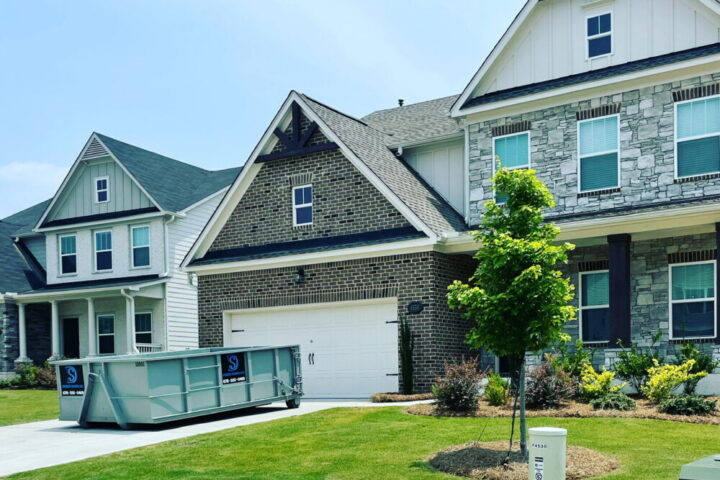
Selecting the appropriate roll-off dumpster for junk removal projects requires prior planning to make sure that your experience is successful and efficient. You might be looking at some construction waste material and asking yourself how many cubic yards you will require for disposal. Understanding various dumpster sizes is the first step toward a successful cleanup. A temporary dumpster rental in Roswell provides the flexibility needed to manage large volumes of waste without the hassle of making dozens of trips to the local landfill.
As opposing to conventional weekly garbage collection, a roll-off dumpster provides you with an opportunity to dispose of heavy-duty debris that cannot be managed by municipal authorities. By hiring a temporary dumpster from a reliable company, you create a central point where all waste is collected, maintaining cleanliness in your working environment. This article will assist you in picking the ideal dumpster and getting value for your money without overspending on empty space.
The Science of Cubic Yards: Standardizing Waste Measurement
To achieve consistency in measuring volumes of their products, most waste disposal service providers use cubic yards as the measurement unit. A cubic yard is a measurement in three dimensions and comprises three feet in width, three feet in length, and three feet in height.
Visualizing the Cubic Yard
To picture this in practical terms, consider these common comparisons:
- A Kitchen Stove: A standard kitchen stove is roughly one cubic yard of total volume.
- An Armchair: A large upholstered armchair also equals approximately one cubic yard.
- The Pickup Truck Ratio: A standard full-size pickup truck bed typically holds about 2.5 cubic yards of debris when filled level to the top.
Knowledge of the ratio of a pickup truck becomes the industry norm when making calculations in mind. In case one sees a heap that would be enough to fill four pickup trucks, that would translate to approximately 10 cubic yards. This means that a standard 10-yard dumpster container will have enough space for four pickup trucks’ worth of home waste or light construction debris.
The “Fluff Factor”
While making your estimates, the fluff factor needs to be included. This is because there are air pockets formed due to inefficient packing. Though mathematically it may only be two cubic yards for a heavy couch, the actual bin space that it uses could end up being three yards since other pieces of stuff cannot fit around it. Proper packing and dismantling of items will allow much more trash to be put into the dumpster.
Analyzing the Dimensions of Roll-Off Dumpsters
Standard sizes are available in the garbage collection business in order to cater to various kinds of cleaning activities. Generally, vendors supply containers that have a capacity of between 10 yards and 40 yards. Information about the actual size will assist in planning for driveway access.
1. The 10-Yard Dumpster: Compact and Accessible
The 10-yard dumpster in Alpharetta is the smallest standard option, perfect for residential use and light cleanups.
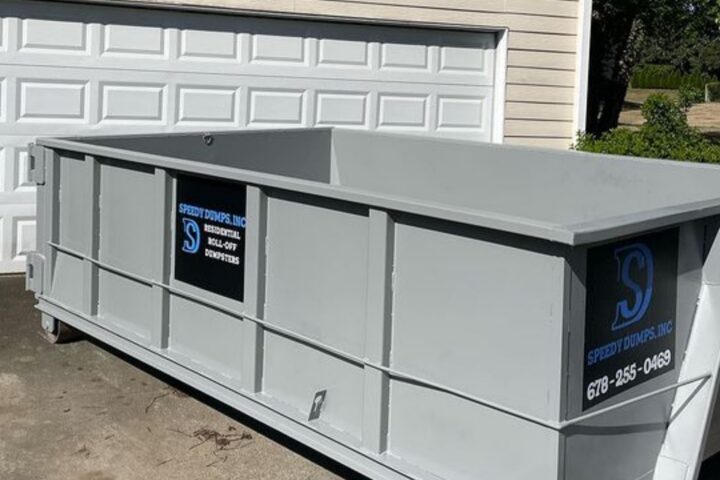
- Dimensions: Approximately 12′ Long × 8′ Wide × 3.5′ Tall.
- Best For: Small basement cleanouts, minor yard waste removal, or single-bathroom updates.
- Benefit: Its footprint is similar to a passenger vehicle, making it ideal for tight driveways or urban environments where street access is limited. The low walls also make it easy to toss heavy items over the side without straining your back.
2. The 15-Yard Dumpster: The Versatile Middle Ground
Stepping up slightly, the 15-yard dumpster accommodates medium-sized residential tasks that require more vertical space.
- Dimensions: Approximately 16′ Long × 8′ Wide × 4′ Tall.
- Best For: Master bathroom renovations or small kitchen updates.
- Capacity: It holds about six pickup truck loads of material. The extra length and height allow for longer items, such as rolled carpets or small furniture pieces, to fit more comfortably.
3. The 20-Yard Dumpster: The Industry Standard
The 20-yard dumpster remains the most popular choice for both homeowners and professional contractors.
- Dimensions: Approximately 22′ Long × 8′ Wide × 4.5′ Tall.
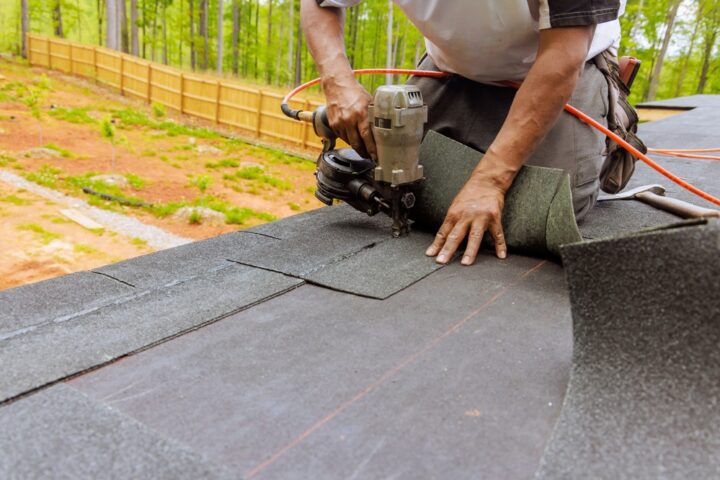
- Best For: Large kitchen renovations, floor removals, or complete asphalt shingle roofing replacements.
- Capacity: It holds approximately eight pickup loads. This size is considered the “sweet spot” because it fits in most driveways while offering enough length to lay floorboards and drywall sheets flat.
4. The 30-Yard Dumpster: Large-Scale Construction
For major residential additions or business construction, a 30-yard dumpster is usually required.
- Dimensions: Approximately 22′ Long × 8′ Wide × 6′ Tall.
- Best For: Whole-home siding replacements, large-scale landscaping, or major estate cleanouts.
- Capacity: Holding about 12 truckloads, these bins feature high walls and typically require a walk-in loading method via the rear swinging door.
How to Calculate Your Debris Volume Mathematically
Guessing your trash volume often leads to ordering the wrong size, resulting in extra expenses. If your debris is somewhat organized (lumber, drywall, or stacked boxes), you can use a simple mathematical formula to estimate your needs:
- Measure the Pile: Measure the Length, Width, and Height of your debris pile in feet.
- Calculate Cubic Feet: Multiply them together.
- Convert to Cubic Yards: Divide the total cubic feet by 27 (since there are 27 cubic feet in one cubic yard).
Always round up your estimate. It is much more cost-effective to have a little extra space than to be forced to order a second container because you were short by a single yard.
Navigating Weight Limits and Loading Pro-Tips
When you rent a dumpster, you must consider more than just physical dimensions. Every bin comes with a weight limit.
- Dense Materials: Materials like brick, dirt, or concrete are incredibly heavy. You may reach your weight limit long before the container is physically full. If you are disposing of these materials, ask your provider about “inert” or “heavy debris” containers.
- Loading Technique: To maximize space, load large, flat items (like plywood or doors) at the bottom first. Fill in the gaps with smaller debris. This keeps the load level and prevents items from sticking out over the top.
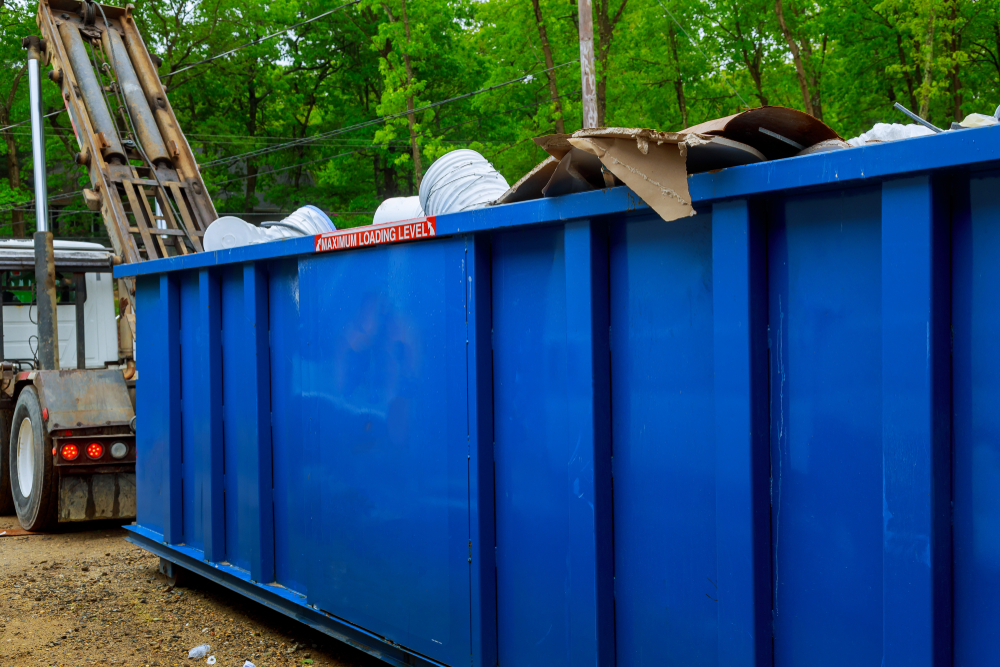
- The “Water Level” Rule: Most jurisdictions prohibit the transport of “overfilled” dumpsters. Debris must be level with the top of the bin; if anything is protruding, the driver may refuse to pick it up for safety reasons.
Local Regulations, Permits, and Prohibited Items
Prior to the arrival of the truck, make sure you are aware of the location of the dumpster. In some municipalities, you need a Right-of-Way permit if the dumpster is situated on any public road or sidewalk. Also, contact your HOA concerning regulations for temporary structures.
Prohibited Items
You must also be aware of hazardous waste. Most standard roll-offs strictly prohibit:
- Paints, stains, and lacquers
- Tires and car batteries
- Refrigerants (Freon) and appliances containing them
- Electronics (E-waste)
- Medical waste or hazardous chemicals
Placing these in a dumpster can lead to environmental fines and the rejection of your entire load at the landfill. Always ask your hauler for a “Prohibited Items” list before you start loading.
Maximizing Your Disposal Experience
To avoid common pitfalls, keep these final tips in mind:
- Clear Access: Make sure your driveway is clear of parked cars and low-hanging branches on delivery and pickup days. A “blocked” bin usually results in a trip fee.
- Rental Duration: Standard rentals usually last 7 to 10 days. If you finish early, call for a “priority pickup” to regain your driveway space.
- Protect Your Surface: If you have a brand-new driveway, consider laying down plywood sheets for the dumpster to sit on to prevent scraping or cracking.
Effective planning makes sure that you have an organized and safe working environment. Irrespective of whether you are doing any small spring cleanup project or big commercial demolition project, making sure that you select the best roll-off dumpster size will achieve success in the project. Contact us at Speedy Dumps, Inc. 678-255-0469 today for more details regarding the selection of the best roll-off dumpster size.