If you’ve just finished tearing out old carpet or tile, you’re probably looking at a huge pile of debris and wondering: “Can I put carpet and tile in a commercial dumpster?” It’s a common question, and the answer isn’t always a simple “yes” or “no.” Tossing flooring into the nearest dumpster might seem like the quickest way to clear your site, but there are logistical, legal, and environmental rules you need to navigate. From weight limits that can damage local pavement to hazardous material regulations in Fulton County, doing it wrong can lead to steep fines or your bin being left on the curb.
The Short Answer: It Depends on the Dumpster Type
Carpet and tile are officially classified as Construction and Demolition (C&D) debris. While standard commercial dumpsters (the ones you see behind restaurants or retail stores) are designed for “putrescible” waste, like food scraps and office paper, renovation waste is an entirely different beast.
Residential vs. Construction Dumpsters
Typically, dumpster companies in Forsyth County provide two main paths for flooring:
- Standard Roll-Offs: These can often take carpet and ceramic tile, provided you stay within a strict weight limit.
- Dedicated C&D Bins: If you are tearing out 2,000 square feet of tile, you need a bin specifically designated for construction waste. These are sent to specialized landfills in Georgia that handle inert materials differently than household garbage.
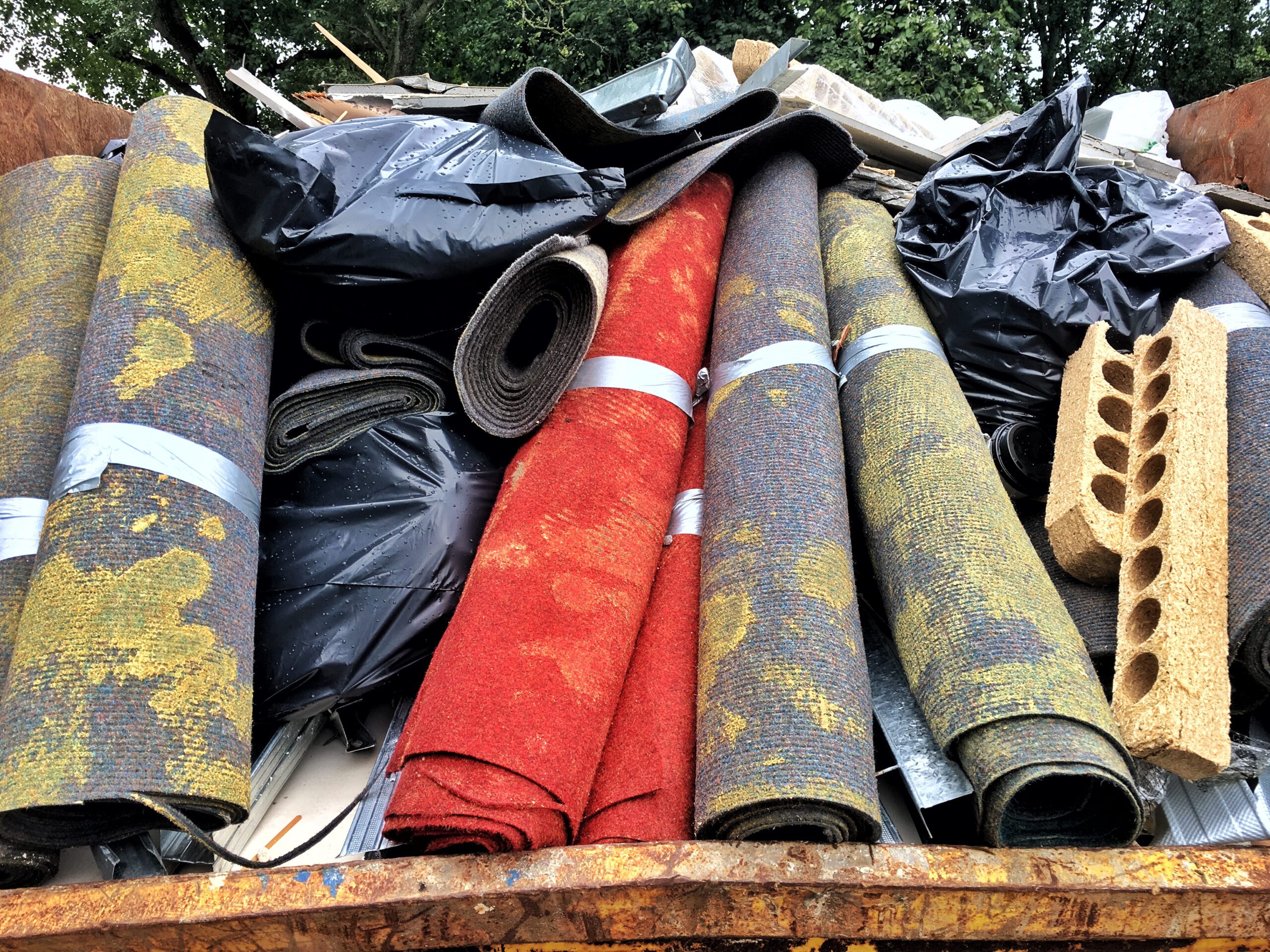
Pro Tip: Always check your rental agreement. Some companies require carpet to be cut into 4-foot strips or bundled, while others may prohibit “heavy” materials like tile in their larger 40-yard bins because the truck won’t be able to lift it once it’s full.
Local Rules: The Georgia Landscape
Even if your dumpster company gives you the green light, local municipal codes might say otherwise. In Georgia, waste management is governed by both state EPD (Environmental Protection Division) rules and local county ordinances.
1. Landfill Restrictions in Roswell and Milton
Landfills in the North Atlanta area have specific “acceptance” lists. For instance, some landfills in Roswell may restrict large volumes of carpet because it doesn’t break down easily and can interfere with the landfill’s “leachate” (liquid runoff) collection systems.
2. The Asbestos Warning (Old Vinyl Tile)
This is the most critical safety rule: Old vinyl tiles (specifically 9×9 tiles from before 1980) and their black adhesive “mastic” often contain asbestos.
The Law: Under Georgia EPD Rule 391-3-4-.04, asbestos-containing waste is a “special waste.” You cannot legally put it in a standard commercial dumpster.
- The Penalty: If a driver spots suspected asbestos tile in a bin, they are legally required to stop the haul. You may be forced to hire a licensed abatement contractor to clear the bin, costing thousands of dollars.
Why Weight is Your Biggest Enemy
When people ask if they can put tile in a dumpster rental in Milton, they usually underestimate the density of the material.
- Ceramic Tile: A single square foot of ceramic tile (including mortar and backer board) can weigh between 3 and 5 lbs. A medium-sized kitchen and hallway (500 sq. ft.) can easily add 2,500 lbs to your dumpster.
- The “Weight Out” Risk: Most 20-yard dumpsters have a weight limit of 3 to 4 tons. If you fill that bin with tile, you will “weight out” long before you “fill up.”
Overage Fees
In areas like Norcross or Alpharetta, exceeding your weight limit can result in overage fees ranging from $60 to $100 per ton. It is often cheaper to rent two smaller dumpsters or a dedicated “heavy debris” bin than to pay the penalties on one overloaded container.
Alternatives: Reuse, Recycle, or Remove
Before you toss everything into a bin, consider these eco-friendly (and often wallet-friendly) alternatives:
1. Carpet Recycling Programs
Most modern synthetic carpets (nylon, polyester) are highly recyclable. Organizations like the Georgia Recycling Coalition can point you toward “take-back” programs. Some local carpet retailers in the Milton area will even accept old padding for recycling if you are purchasing new flooring from them.
2. Donation and Reuse
- Unused Tile: If you have several boxes of new, leftover tile, don’t throw them away! Organizations like Habitat for Humanity ReStore in Roswell or Alpharetta love these donations.
- Carpet Scraps: Clean remnants can be used by local animal shelters for bedding or by homeowners for insulating dog houses and workshops.
3. Professional Junk Removal
If you only have a small amount of carpet from one bedroom, a full dumpster rental in Roswell might be overkill. A junk removal crew can come in, do the heavy lifting for you, and make sure the material is sorted for recycling or disposal.
Summary Checklist for Flooring Disposal
Before you start the demolition, run through this quick checklist:
- Identify the age of the floor: Is it vinyl tile from before 1980? (Get it tested for asbestos).
- Calculate the weight: Estimate the square footage x 4 lbs (for tile) to see if you’ll hit a weight limit.
- Call your provider: Ask specifically: “Do you allow loose carpet/tile, or does it need to be bagged/bundled?”
- Check for moisture: Carpet acts like a sponge. If it’s been sitting outside in the Georgia rain, its weight will triple, leading to massive overage fees.
Final Thoughts
Can tile and carpet be disposed of in a commercial dumpster? Sometimes, but only if permitted by local regulations and the type of dumpster. Always confirm with the local waste authority and your rental provider. You can prevent unforeseen expenses and maintain the smooth operation of your project by renting the appropriate dumpster and adhering to disposal regulations. The key to a stress-free cleanup is preparation. For additional information on how Speedy Dumps, Inc. can help you with your renovation project, contact us today!