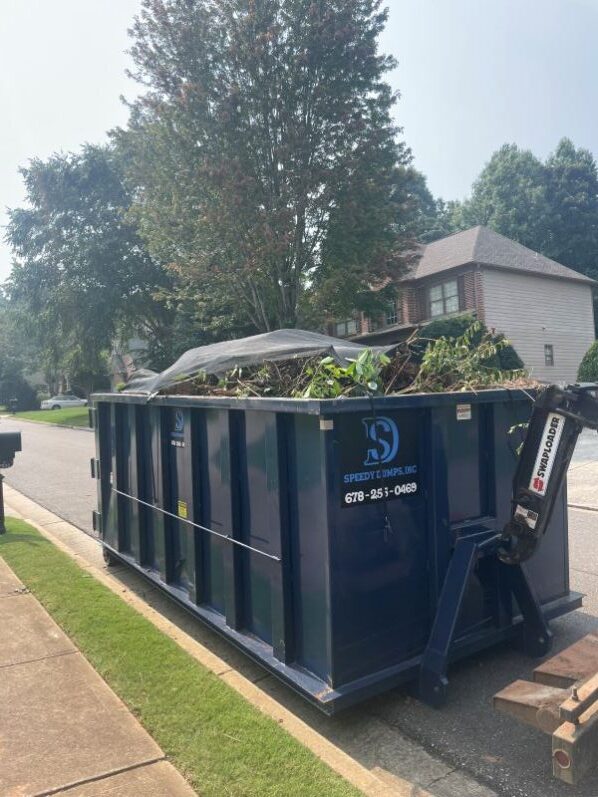
What Happens To Garbage After It’s Picked Up from a Dumpster?
Ever wonder what happens to your garbage after it gets tossed in the dumpster and is carted away? For most, it’s not something anyone really thinks about. Once the truck pulls away and the hydraulic hiss fades into the distance, the waste is “gone.” However, “away” is a specific destination, or rather, a series of destinations.
In reality, waste management is a massive, highly engineered industrial process that keeps our communities clean, protects our public health, and preserves the delicate ecosystems of Georgia. Whether you are a homeowner tackling a renovation project, a business owner managing daily refuse, or a contractor on a massive construction site, understanding the lifecycle of waste helps you make smarter, more eco-friendly choices.
Here is an in-depth look at how your garbage travels once it leaves your property in Georgia.
The “Out of Sight” Myth: Why the Process Matters
Before we dive into the steps, it is important to understand the scale of the operation. The average American generates about 4.9 pounds of municipal solid waste (MSW) per day. In a growing state like Georgia, with bustling hubs like Roswell and Gainesville, that adds up to millions of tons of material annually. Without a sophisticated “post-dumpster” workflow, our streets would become unsanitary, and our groundwater would be at risk of contamination.
Step 1: The First Stop: The Transfer Station and Sorting Facility
Once the dumpster is hoisted and emptied into a hauling truck, the first destination is rarely the landfill. Instead, most waste is taken to a Transfer Station or a Material Recovery Facility (MRF).
Think of a transfer station as a massive logistics hub. Here, smaller collection trucks drop off their loads, which are then consolidated into larger trailers for long-distance transport. This reduces the number of trucks on Georgia’s highways, lowering carbon emissions and traffic congestion.
During this stage, initial sorting begins. Large items that shouldn’t be in the general waste stream, such as appliances (white goods), tires, or large pieces of scrap metal, are pulled out. Specialized facilities use a combination of human labor and advanced technology to categorize the waste:
- Recyclables: Items like cardboard, aluminum, and certain plastics.
- Organic Waste: Yard debris and food scraps that can be diverted.
- Hazardous Materials: Batteries, chemicals, and “e-waste” (electronics) that require specialized handling to prevent environmental toxins from leaching into the soil.
- Inert Waste: Construction debris like concrete and bricks that can often be crushed and reused.
Step 2: Recycling: Giving Waste a Second Life
If your waste contains recyclable materials, it is diverted to a specialized processing plant. Modern recycling is a marvel of engineering. At these facilities, “single-stream” recycling is sorted using:
- Optical Sorters: Infrared sensors that identify different types of plastic (like PET vs. HDPE) and use puffs of air to shoot them into the correct bins.
- Magnetic Separators: Massive magnets that pull out steel and tin cans.
- Eddy Currents: Systems that use electromagnetic fields to repel aluminum cans, “jumping” them off the conveyor belt into a separate collection area.
Once sorted, these materials are cleaned, shredded, or melted down to become raw stock for new products. For example, your old soda cans might be back on a grocery store shelf as a new can in as little as 60 days. By prioritizing recycling, we conserve natural resources like timber, water, and minerals, while significantly reducing the energy required for manufacturing.
Step 3: Composting: Turning Waste into Georgia Gold
In Georgia, organic waste, including food scraps, fallen leaves, and grass clippings, represents a significant portion of the waste stream. When these items are sent to a landfill, they decompose anaerobically (without oxygen), which produces methane, a potent greenhouse gas.
To prevent this, many loads are diverted to industrial composting operations. These facilities manage the biological decomposition of organic matter, turning it into “Georgia Gold”, nutrient-rich compost. This finished product is sold back to farmers, landscapers, and gardeners to improve soil health, retain moisture, and reduce the need for chemical fertilizers. For homeowners in Roswell or Gainesville, utilizing a dumpster service in Milton that understands organic diversion is one of the easiest ways to support local agriculture.
Step 4: Landfill Disposal: The Highly Engineered Last Resort
Despite our best efforts to recycle and compost, there will always be residual waste that cannot be repurposed. This “true trash” is headed for a landfill. However, modern landfills are not just “holes in the ground.” They are highly regulated, complex structures designed to isolate waste from the surrounding environment.
How a Modern Georgia Landfill Works:
- The Liner System: Before any trash is added, the “cell” is lined with several feet of compacted clay, topped by a high-density polyethylene (plastic) liner. This creates an impermeable barrier.
- Leachate Collection: As rainwater filters through garbage, it creates a liquid called “leachate.” Landfills use a network of pipes to collect this liquid and send it to a treatment plant, making sure it never touches the groundwater.
- Compaction: Every day, heavy machinery (compactors) drives over the trash to crush it, saving space and preventing pests.
- Daily Cover: At the end of each day, the waste is covered with a layer of soil or “alternative daily cover” (like spray-on foam) to reduce odors and keep birds away.
- Methane Capture: As waste breaks down, pipes embedded in the landfill collect methane gas. In many Georgia facilities, this gas is refined and used to generate electricity, turning a byproduct of decay into a source of renewable energy.
Step 5: Waste-to-Energy: A Smarter Alternative
In some regions, non-recyclable waste is diverted to Waste-to-Energy (WTE) plants instead of landfills. These facilities incinerate trash at extremely high temperatures. The heat generated boils water to create steam, which turns turbines to produce electricity.
This process can reduce the volume of waste by up to 90%. While there are concerns regarding air emissions, modern WTE plants use sophisticated “scrubbers” and filtration systems to make sure that the air released is clean and meets strict Environmental Protection Division (EPD) standards. WTE technology is a vital part of a sustainable future, as it provides a way to manage waste while reducing our reliance on fossil fuels.
The Role of Construction and Demolition (C&D) Waste
If you are looking for a dumpster rental in Alpharetta for a renovation or a construction project, your waste follows a slightly different path. Construction and Demolition (C&D) waste is often heavy; think concrete, wood, drywall, and shingles.
Many C&D loads go to specialized landfills or recycling centers that can handle “inert” materials. Wood can be ground into mulch or biomass fuel; concrete can be crushed into road base; and metals are highly valuable in the scrap market. Using a professional dumpster service guarantees these heavy materials don’t end up in a standard municipal landfill where they would take up valuable space.
Why Responsible Disposal Starts with Your Dumpster Rental
The journey of your garbage is only as successful as its starting point. If a dumpster is loaded with hazardous chemicals or un-sorted prohibited items, it can contaminate an entire truckload of recyclables, forcing the whole batch into a landfill.
Responsible waste management is a partnership between the user and the hauler. By renting a dumpster from a reputable local provider, you make sure that:
- Your waste is handled by drivers who know local Georgia regulations.
- Materials are taken to the appropriate facilities (MRFs, Composting sites, or Lined Landfills).
- Your project remains compliant with local city ordinances in places like Roswell and Gainesville.
Choose Speedy Dumps Inc. for a Cleaner Georgia
At Speedy Dumps Inc., we believe that waste disposal should be simple, efficient, and as environmentally friendly as possible. We don’t just “take your trash away”, we make sure that it enters a system designed to maximize recovery and minimize environmental impact.
Whether you are a homeowner cleaning out a basement, a contractor managing a job site, or a business owner looking for dependable service, we are here to help.
- Roswell Dumpster Rentals: If you need a dumpster rental in Roswell, Georgia, Speedy Dumps Inc. has got you covered with fast, dependable service. We simplify responsible waste disposal so you don’t have to worry about the logistics or the “where it goes” details.
- Gainesville Dumpster Rentals: For those in Gainesville, our dumpster rental options are designed to help keep your project site clean, safe, and efficient, verifying all local disposal guidelines are met.
Let Speedy Dumps Inc. Handle Your Waste!
The next time you toss something into a dumpster, you can do so with the peace of mind that there is a massive team of engineers, sorters, and environmental experts working to handle that item responsibly.
Have questions about what can go in your dumpster? Need advice on how to handle specific materials like yard waste or renovation debris? Give us a call or contact us today! Give us a call or contact us today! Let’s work together for a clean, green Georgia!